admin
admin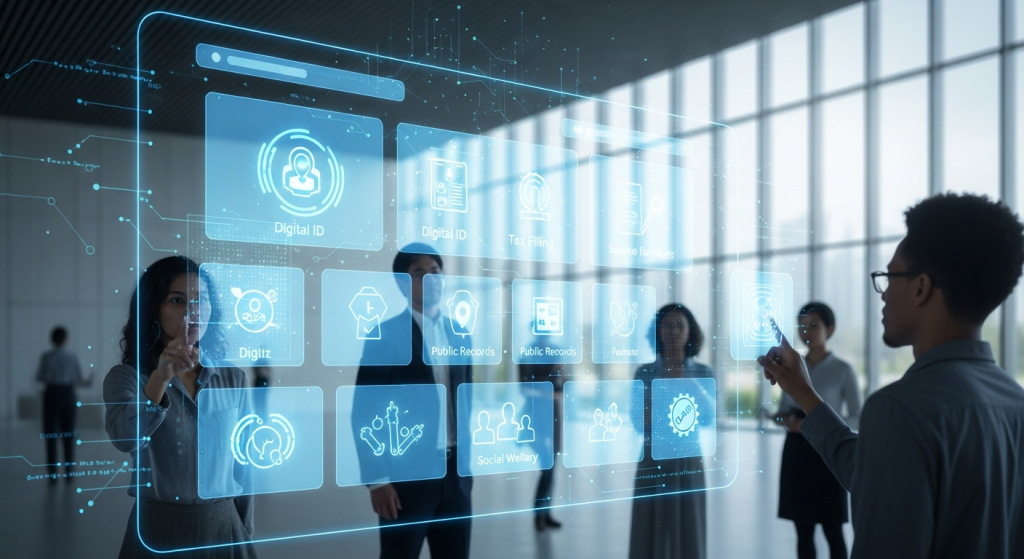
The pace of digital transformation is reshaping public administration, creating opportunities for governments to deliver services more efficiently, transparently, and responsively. By adopting digital government services, institutions can streamline operations, enhance citizen engagement, and improve service accessibility across healthcare, education, transportation, and civic management. These services enable real-time interactions, reduce administrative burdens, and create seamless experiences for citizens while fostering accountability and trust.
With the modernization of governments, there is a need to integrate modern technologies like cloud computing, artificial intelligence, data analytics, and mobile platforms. Introduction of digital government services not only enhances efficiency in the services but also enhances governance structures. Through the use of digital strategies, governments are capable of empowering citizens and compelling them to participate in civic activities as well as ensuring equitable and sustainable delivery of services to various communities.
Digital Government Services: Changing Public Government
Digital government services represent an opportunity to enable governments because using them enables the government to enhance efficiency, eliminate bureaucracy, and improve transparency. The contemporary tools enable agencies to engage citizens, handle data safely, and provide more efficient and correct services quickly.
- Efficient Service Provision
The physical systems are replaced by electronic systems that cut short the wastage of time in documentation and administration. Individuals can submit applications online, pay, and request documents online without necessarily standing in line and waiting. Automation will enable governments to redirect resources to high-impact projects and improve the quality of services. The systems also lead to faster interdepartmental collaboration, and orders that require approval by a number of authorities are executed with ease without due redundancy.
- Data-Driven Decision Making
The developed analytics and integrated databases enable governments to track the service performance, identify inefficiencies, and detect trends. Data-driven strategies can provide the ability to plan proactively and allocate resources so that the services offered to the population are in line with the real demand of the citizens. As an example, the analytics of traffic flow can be used to streamline the management of transport within a city, whereas the insights related to health can be used to plan vaccinations or emergency response efforts.
- Protective Digital Infrastructure
Sensitive information of citizens is contained in cybersecurity protocols, encryption, and access controls. Governments that have adopted digital government services are able to ensure privacy, avert breaches, and build trust within the online platforms. Multi-layered security approaches also guarantee continuity of operations during cyber-attacks, ransomware, or system failure.
- Cost Optimisation and Sustainability
Digitalization lowers the cost of operation due to the use of less paperwork, storage, and administrative overhead. It also contributes to the sustainability of the environment by reducing the use of resources and carbon footprint due to decreased face-to-face communication. The resulting savings may then be reinvested into community projects, smart city efforts, or into upgrading technologies serving the citizens and hence improving the delivery of public services.
Insourcing Innovation on Intelligent Platforms
Governments today are using smart platforms to combine service delivery, monitoring, and engaging citizens. Digital government services are embraced to enable agencies to synchronize with each other and offer a common digital ecosystem.
- Integrated Service Portals
Having several services under one roof makes accessibility for the citizens easy, and duplication of efforts by the government employees is minimized. These portals are single-point-of-sale applications, payment, and information requests. They also combine document verification, digital signatures, and identity management, which offer a seamless user experience and secure experience over various service channels.
- AI-Powered Automation
AI will allow predictive analysis, automated approvals, and intelligent support of citizens. The chatbots and recommendation systems based on AI are better in terms of reducing errors, speedy reaction, and user satisfaction. Moreover, the AI systems could assist the governments in predicting the demand for resources, identifying the anomalies in the delivery system, and offering personalized recommendations to citizens, making the services of the government more proactive and responsive.
- Live Data Analysis and Tracking
They allow the governments to monitor the delivery of services in real-time and understand the delays or bottlenecks of the services. Dashboards give policymakers actionable information so that they can make adjustments to what is being done and improve continuously. These systems also track operational KPIs, identify the gaps in performance, and raise automatic notifications to make sure that the public services provided are in line with the established quality benchmarks.
- Accountability and Transparency
Audit trails and digital logs provide the ability to trace any transaction or request for the service. Transparency will create a feeling of trust in the people towards the government and will lessen the chances of corruption or mismanagement. Compliance is also evidenced through detailed reporting features, and independent audits can be made possible, further enhancing trust in administrative procedures.
Digital Government Philippines: The Future of Government
The Philippines is adopting the modern form of public administration in the form of digital government Philippines, where citizens and businesses can effectively and transparently interact with the government.
- National Digital Frameworks
The new agenda in government is on digital inclusion, standardization of platforms, and data interoperability. Integrated digital plans bring uniformity in the service delivery at the regional level, which facilitates fair citizen experiences.
- Smart Public Services
Online applications are now accessible when it comes to licenses, permits, and benefits, which lessens the amount of administration and makes it easier to access as a citizen. The speed, reliability, and user satisfaction are enhanced by the integration of smart systems.
- Data Privacy and Cybersecurity
Sensitive information is safeguarded with strong policies, encryption, and compliance systems. Citizens are assured that their data is safe and privacy is a priority since they can comfortably access the services.
- Capacity Building and Training
The government workers are being trained on a regular basis on digital systems, cybersecurity, and process management. Competency among the employees means efficient service delivery and smooth adoption of modern technologies.
Conclusion
The adoption of comprehensive digital government services policies and strategies of the Philippines puts the emphasis on efficient, safe, and inclusive delivery of public services. GOVX.0 Philippines offers invaluable assistance to municipalities and agencies to execute modern patterns of governance. GOVX.0 Philippines works to create an ecosystem of connected, resilient, and transparent government with the help of advanced technology, policy advice, and citizen-friendly solutions, which allows both citizens and businesses to succeed in a digital-first environment.